AARON
LIMBU

Spotify Live for Podcast

How might we increase listenership for the podcast section on Spotify?
Visit prototype

Timeline

November 2020

Role

UX and UI design

Tools

Figma, Whimsical, Pen & Paper

Industry

Entertainment

What problem are we solving?

The ability for podcasts to gain exposure is still more challenging than music even though the platform claimed a 200% increase in podcast listening year-on-year for 2019.

Solution

The goal of this project is to increase the number of people listening to podcasts on Spotify by introducing a Live podcast section - where creators can stream Live episodes.

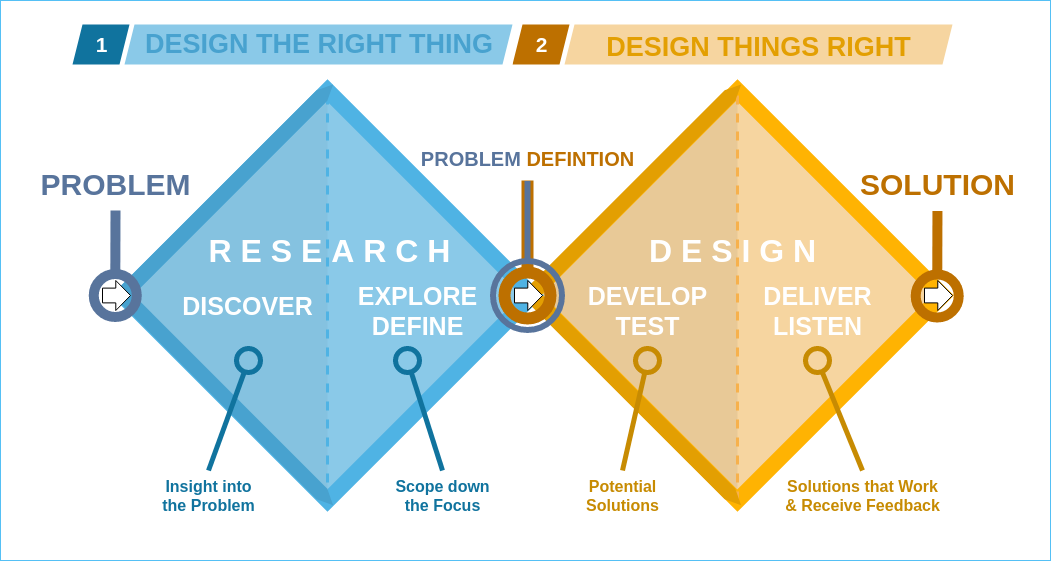
The Double Diamond process was followed to create a roadmap to follow which helped us to explore each design stage more widely or deeply and then take focused action.

01 — RESEARCH

Aligning business goal with user experience

The business goal for this project is to expand Spotify's podcast consumer base and provide more exposure to podcasters. 

A new Live podcast section where participants can also share comments and likes during a live show will produce more audience and increase user engagement rate.

Competitor Analysis

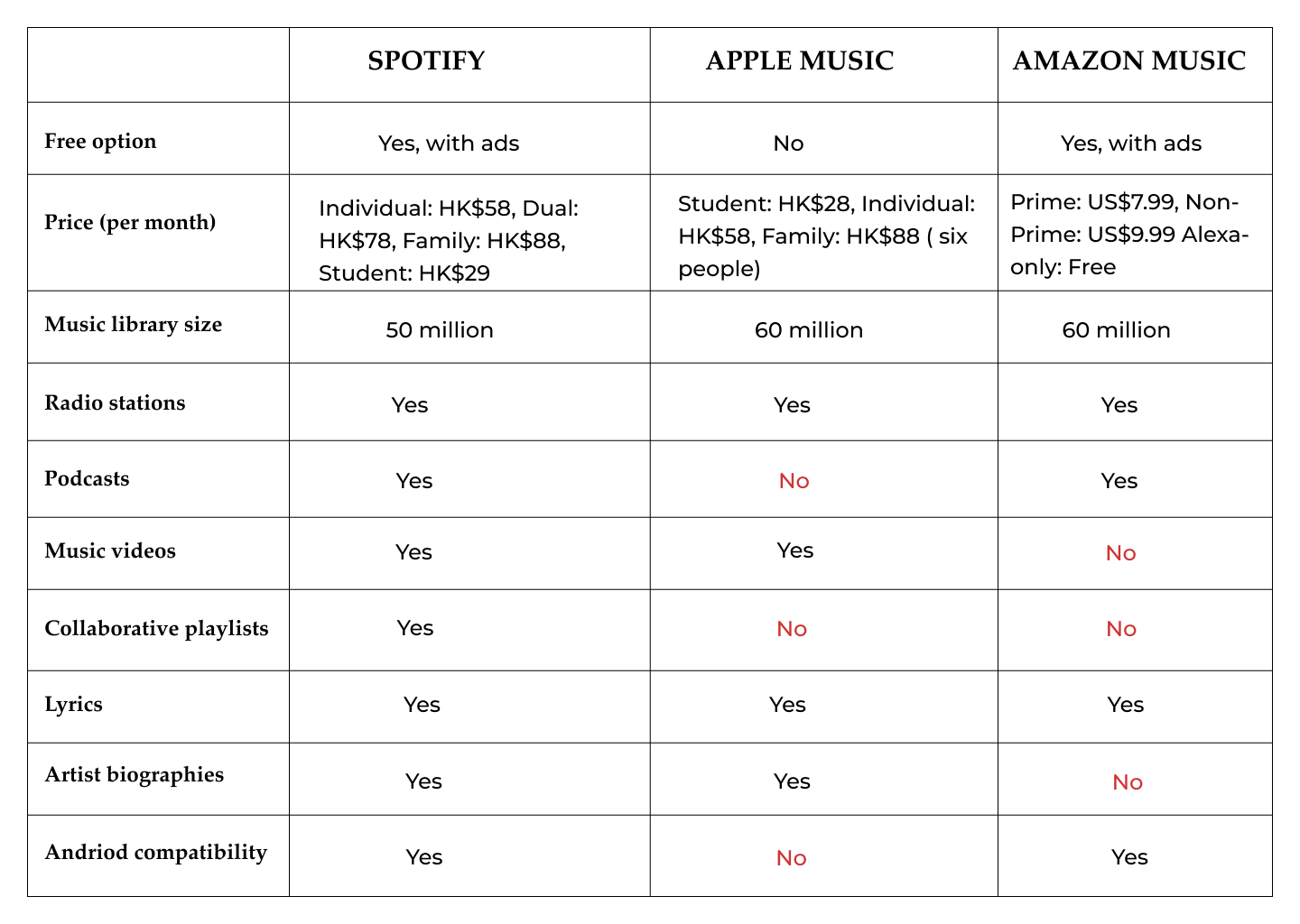
To better understand Spotify's top competitors, I conducted a competitor analysis between the top three music streaming services: Spotify, Apple Music, and Amazon Music.
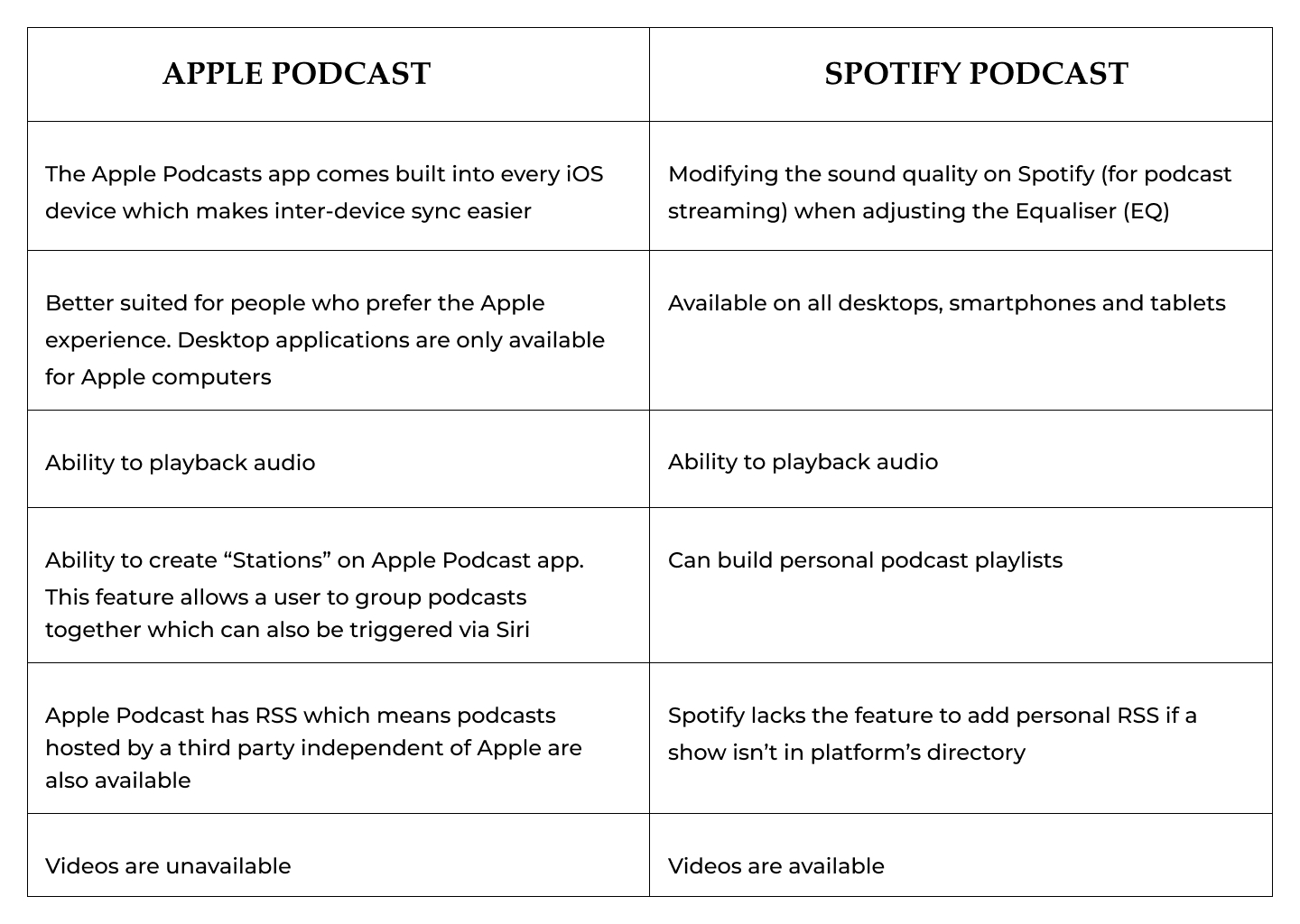
I conducted the second competitor analysis between Spotify's podcast and its biggest rival, Apple Podcast.

User research

After competitor analysis, I was able to come up with a design perspective and based on that I conducted a user research. A survey was conducted to study users' needs, goals, and capabilities to specify the design and construction of the Live segment on Spotify's podcast section.
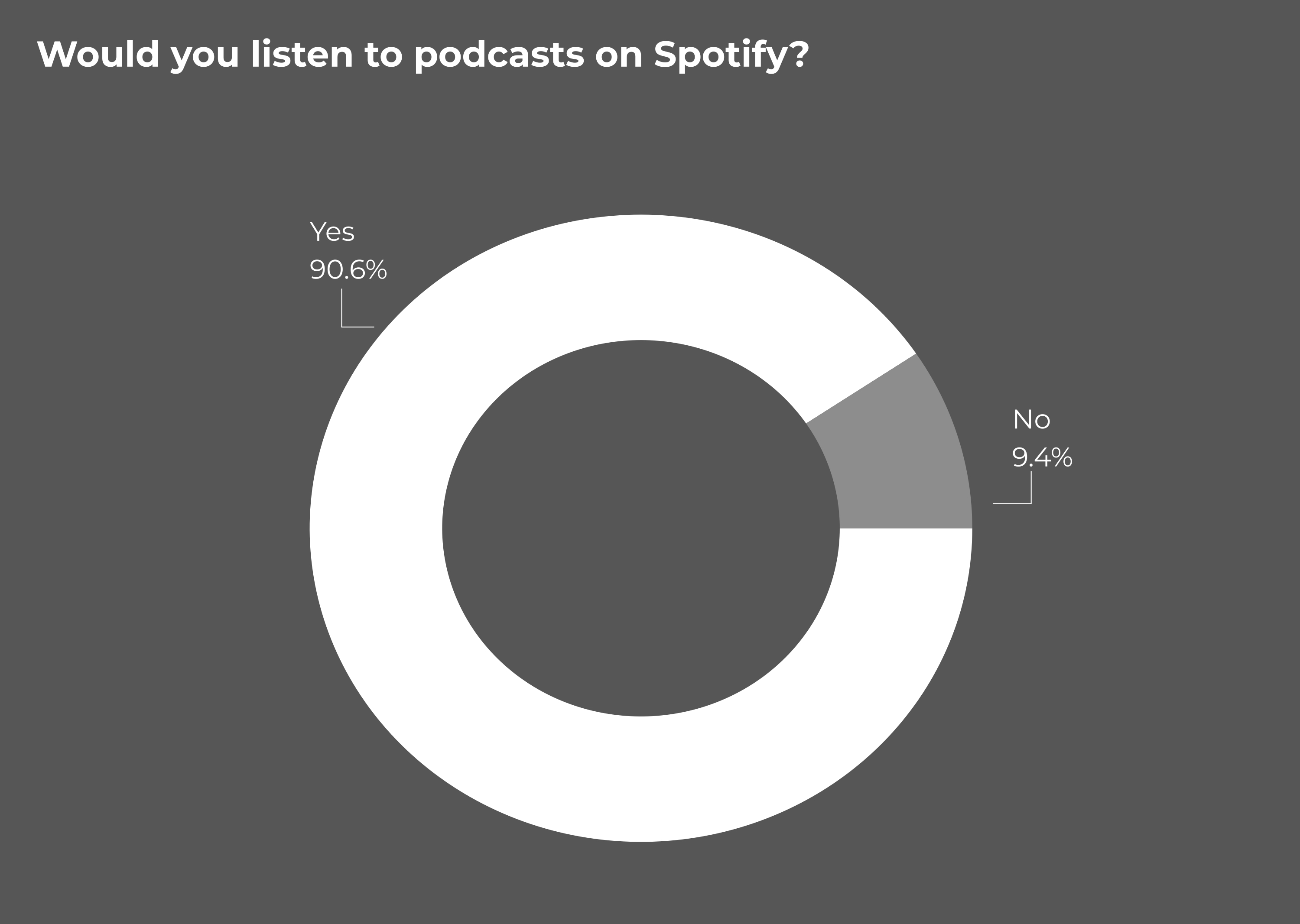
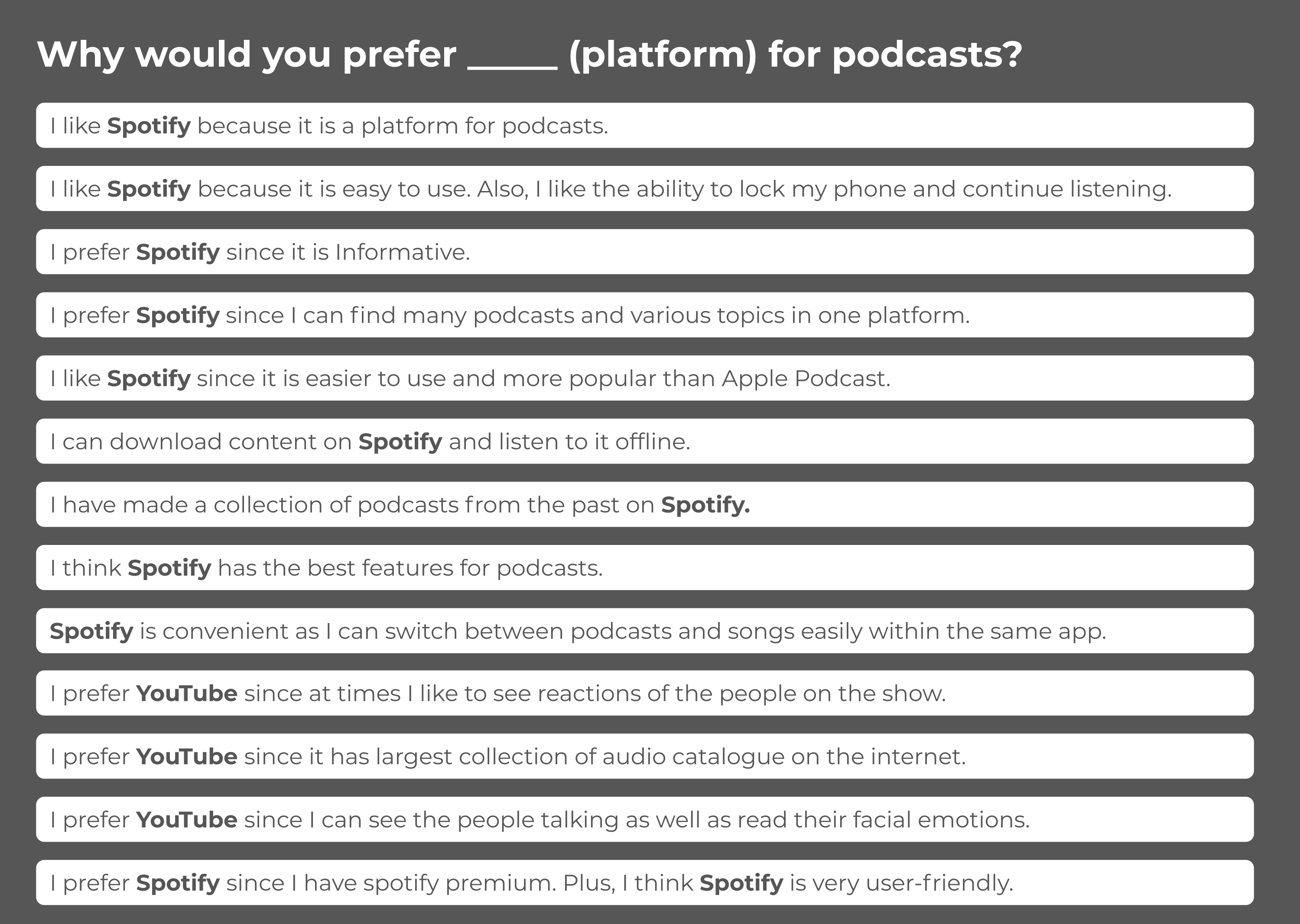
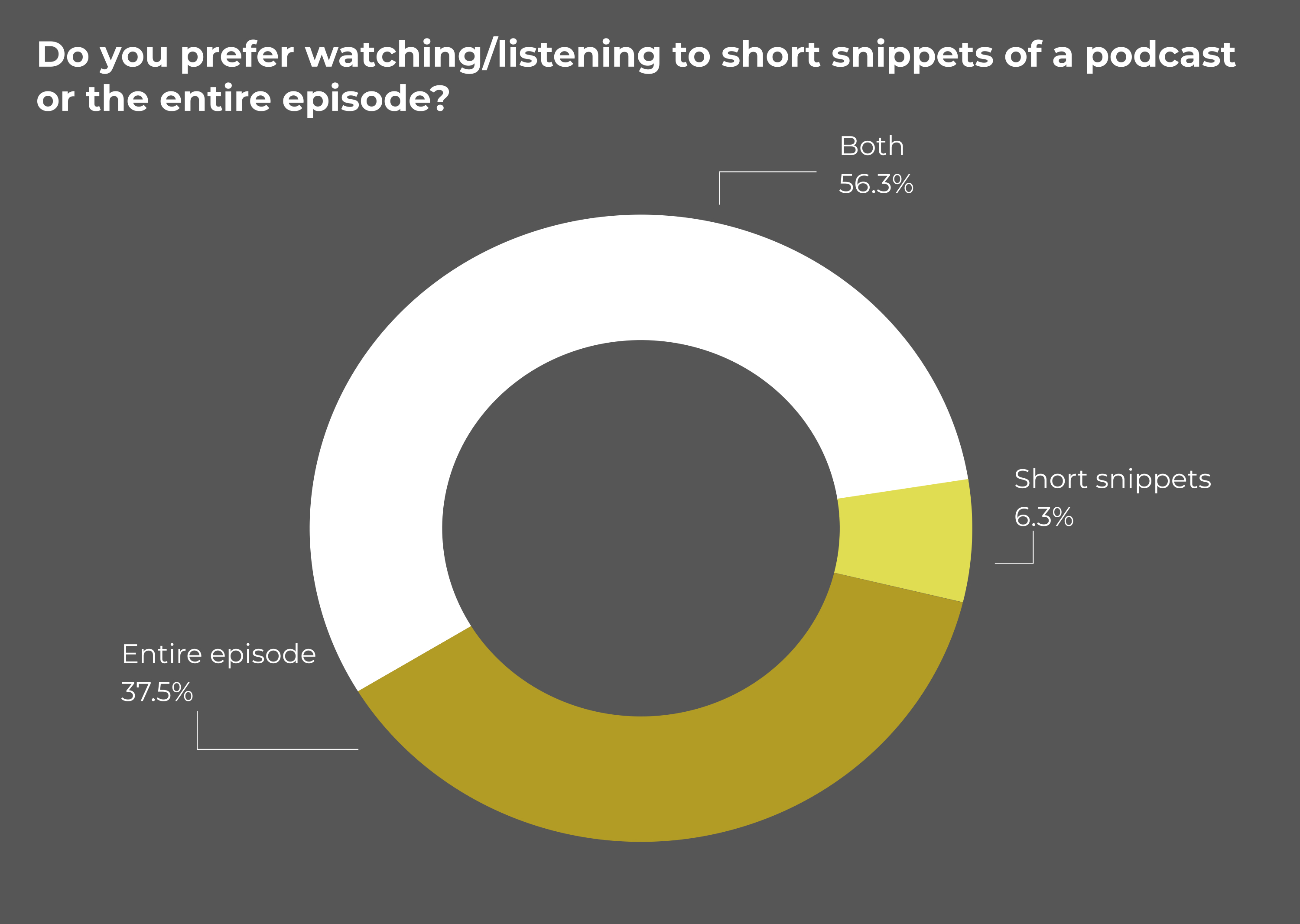
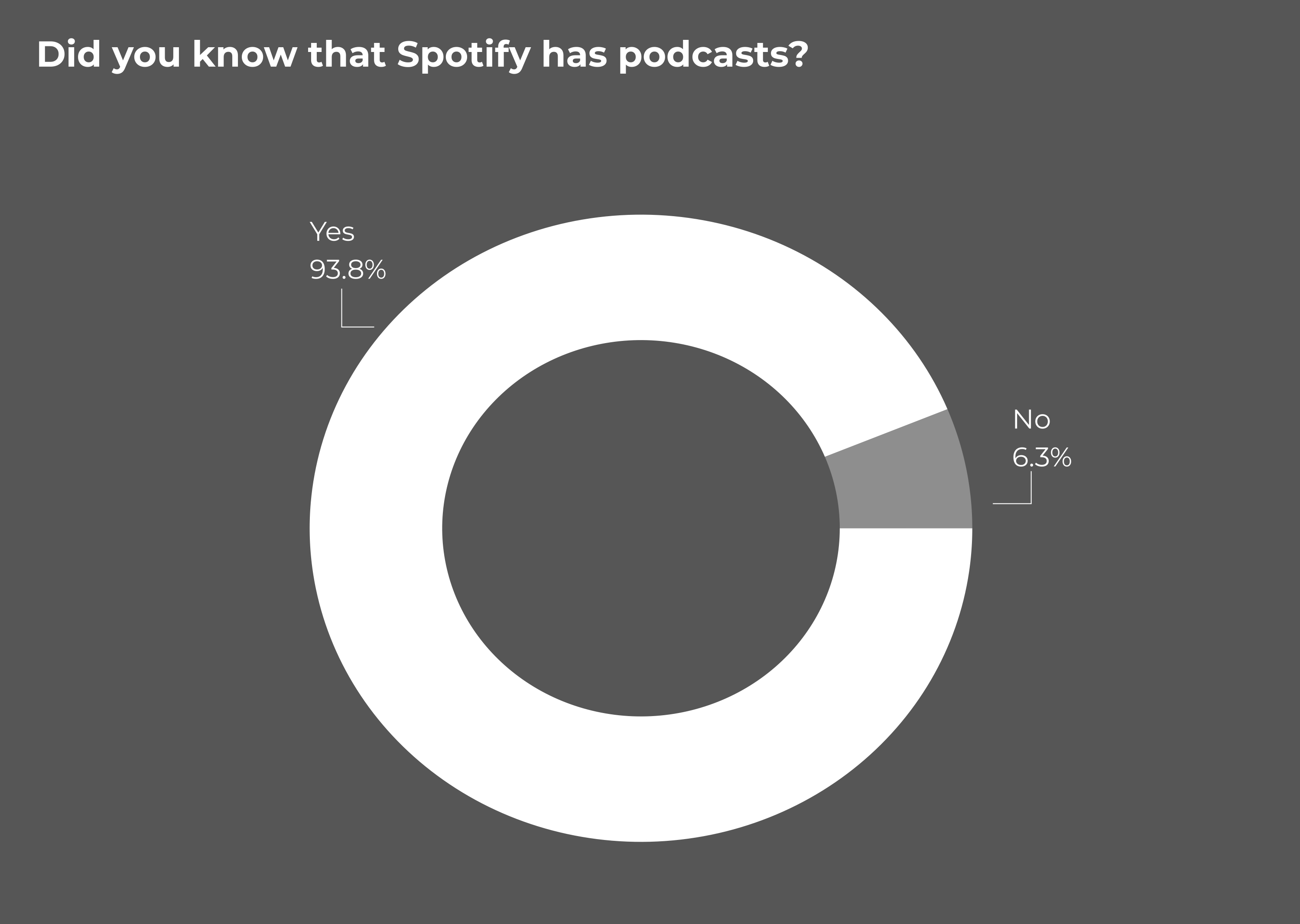
The following are the outcome of the survey, the total response to the study was a modest 32 in full, and the questions of the study were as follows:
The survey's outcome suggests that:
1) Spotify has become a popular platform for podcasts. However, it still remains unexplored by many users.
2) The new Live segment podcast feature will probably remain new to many users, similar to when Instagram introduced their story feature adopted from Snapchat.
Empathy Mapping

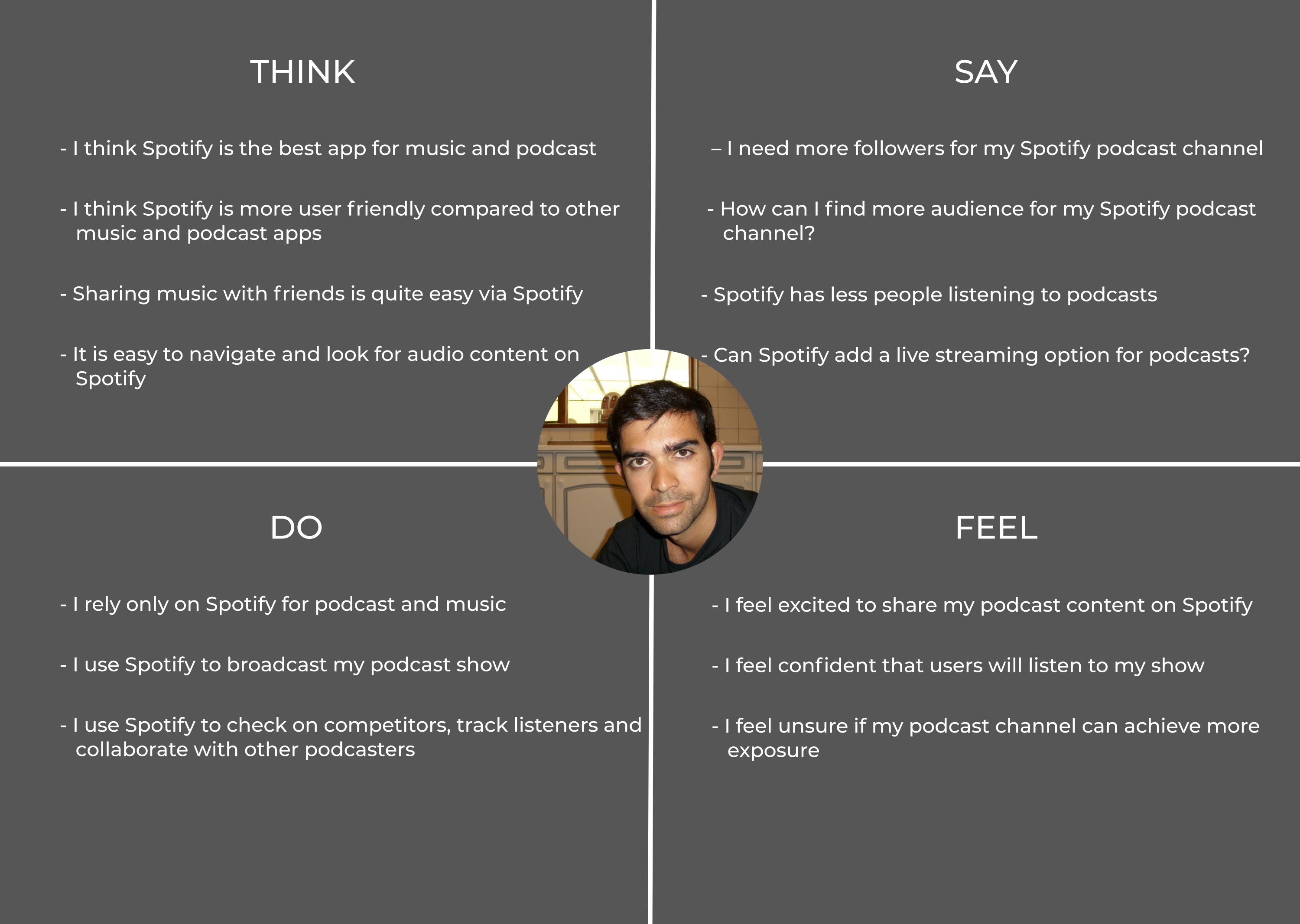
The research insight helped in creating an empathy map to understand pain point:
1) Podcasters have less followers
2) Less people listen to podcast compared to songs
3) Needs more audience

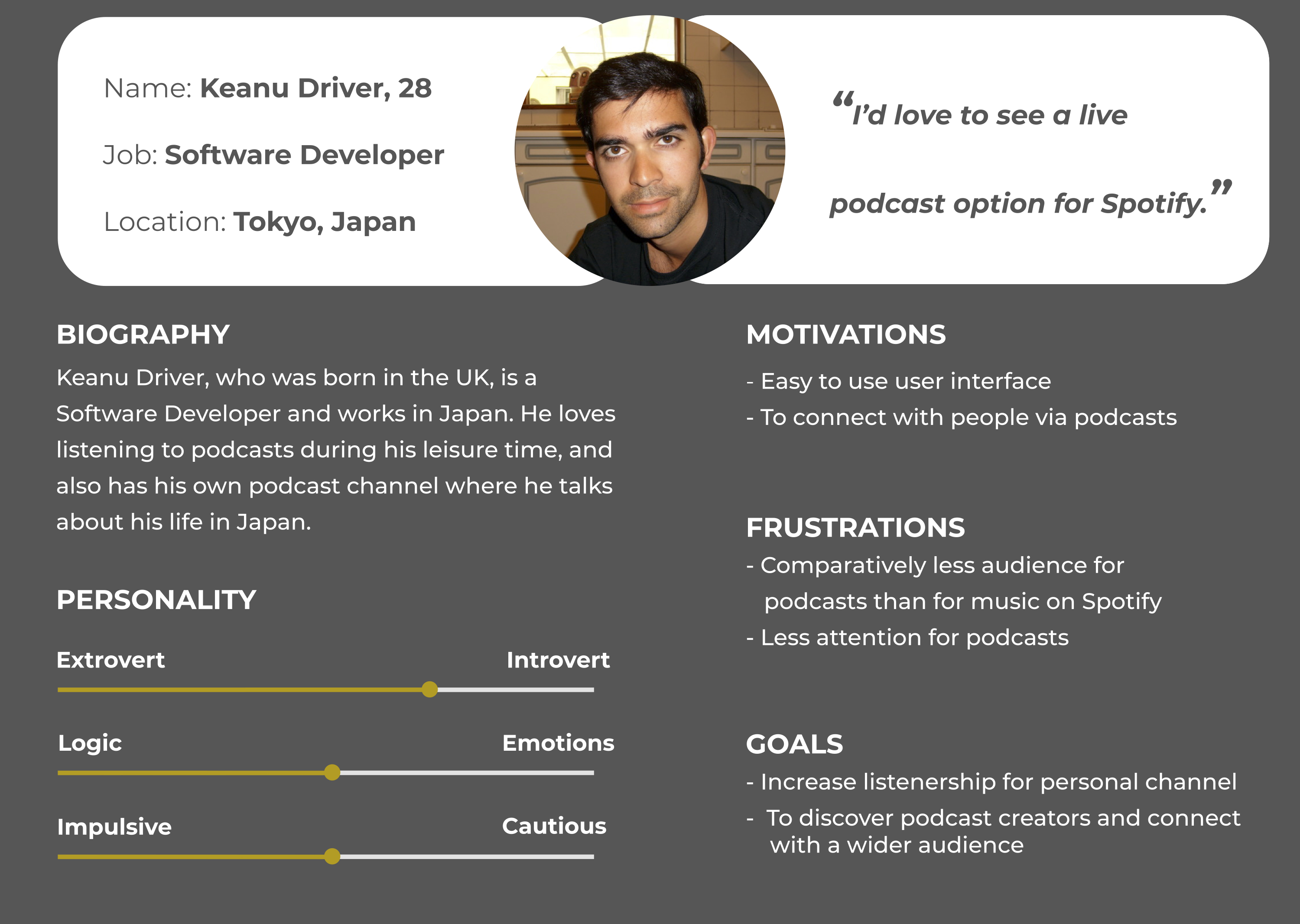
User Persona

After referring to the user research, I recognised a user type and I created a user persona to represent a suitable user type.
Click to open

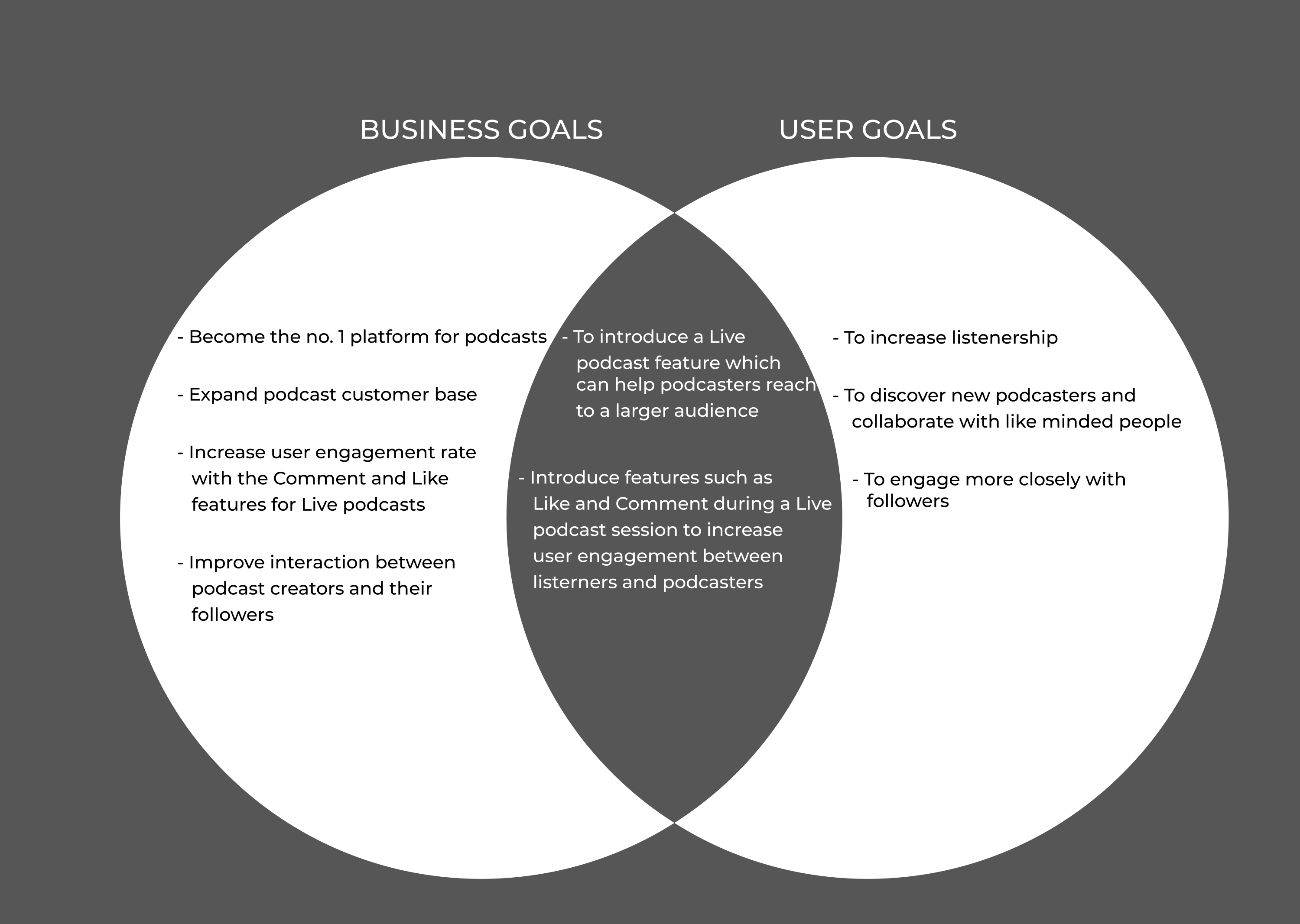
Comparison between business goal and user goal

A big challenge for this project was establishing a common ground between the business goal and user goal for the Spotify podcast. It was essential to find an alignment between the two goals for a mutual connection of the new feature for both the user and the company.
Click to open

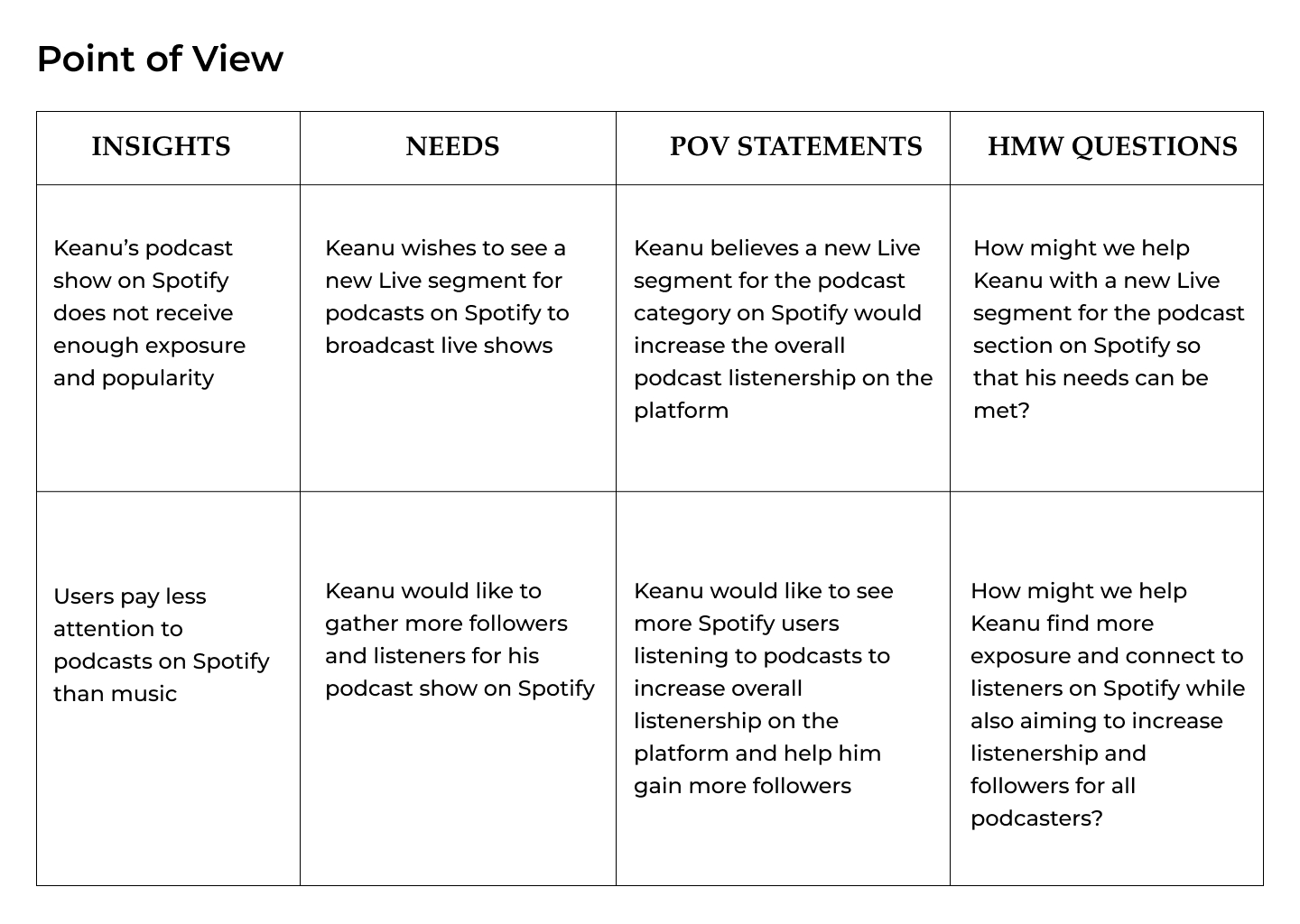
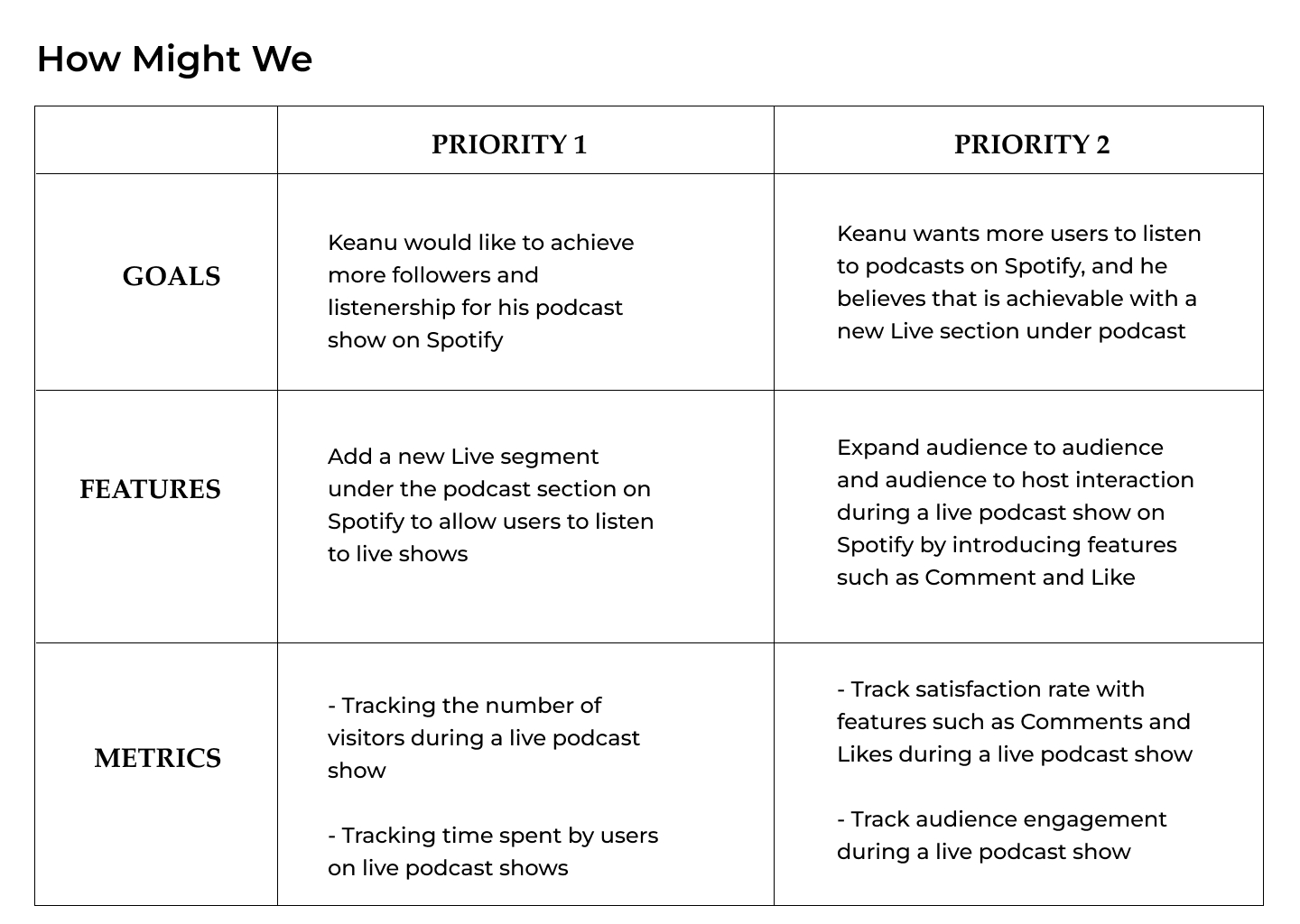
POV & HMW and Product Roadmap

The Point of View (POV) and How Might We (HMW) process was developed after acquiring a better understanding of the problem and empathy for the users.

The product roadmap helped create a high-level overview of the plans and goals relating to user experience and user research.
02 — THE DESIGN PROCESS

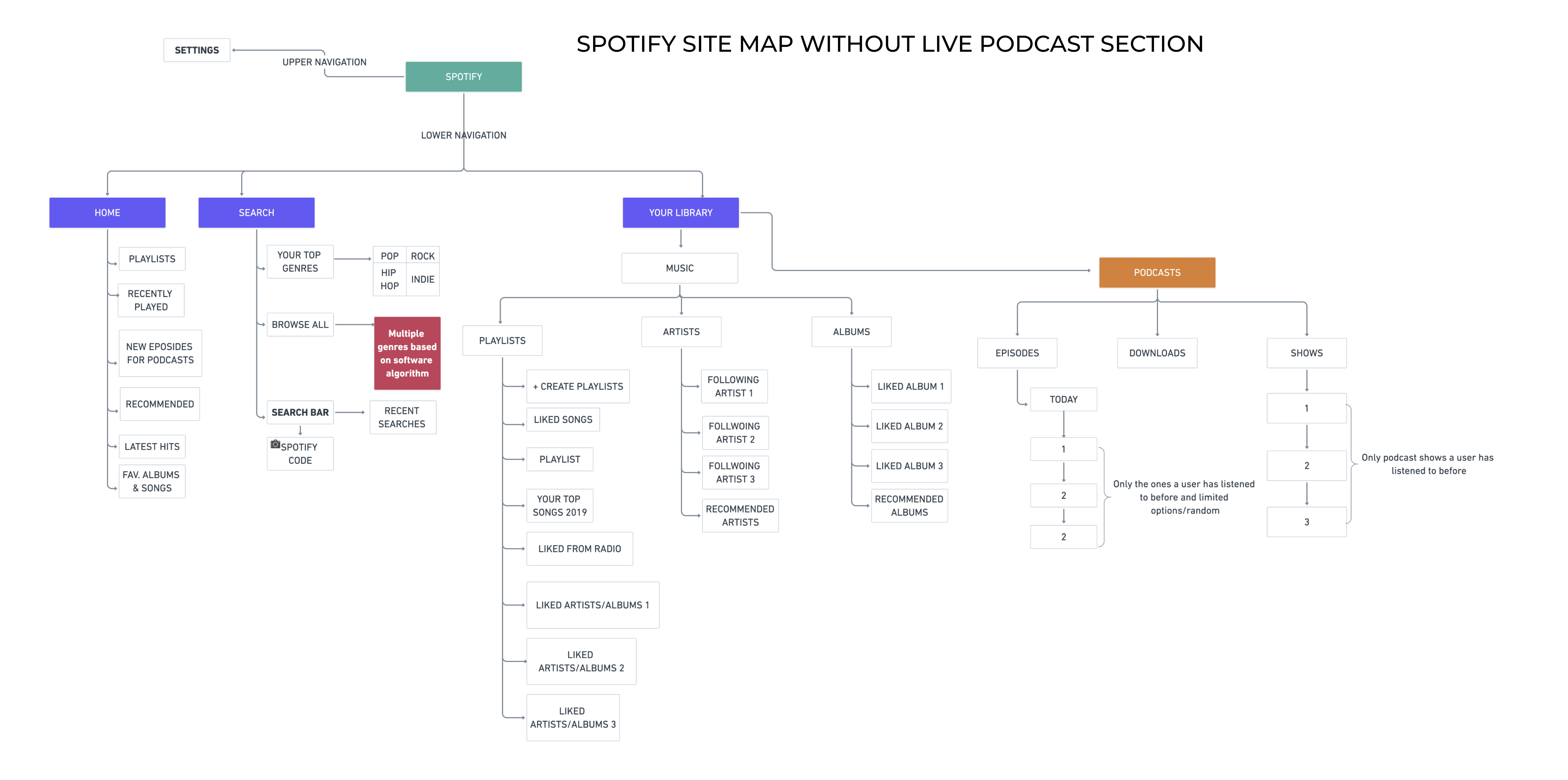
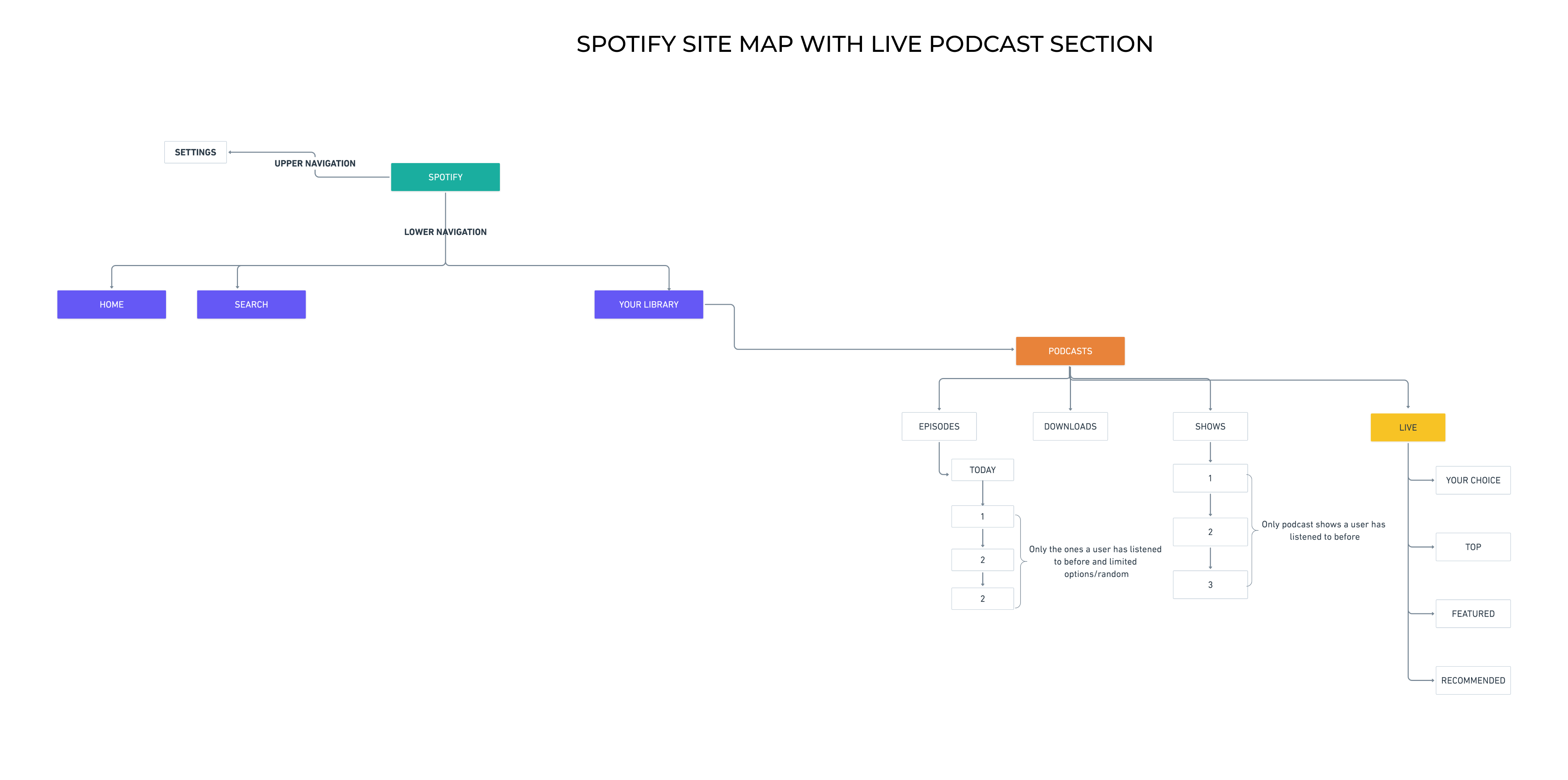
Information Architecture

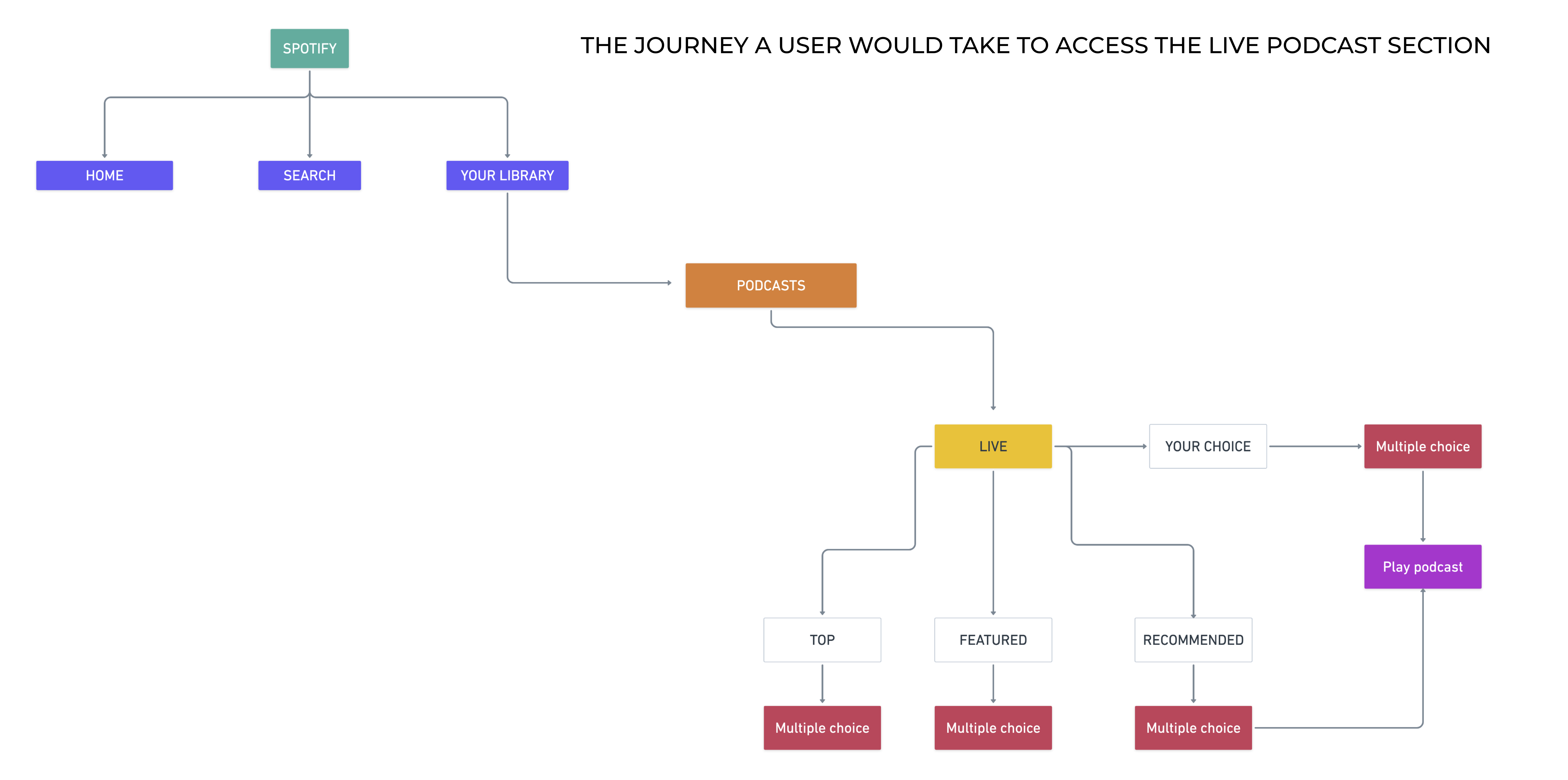
Creating an Information Architecture helped in dissecting the internal structure of Spotify. It helped to understand an effective way to introduce the new Live segment in the podcast section and the steps a user would take to reach a goal.

User Flow

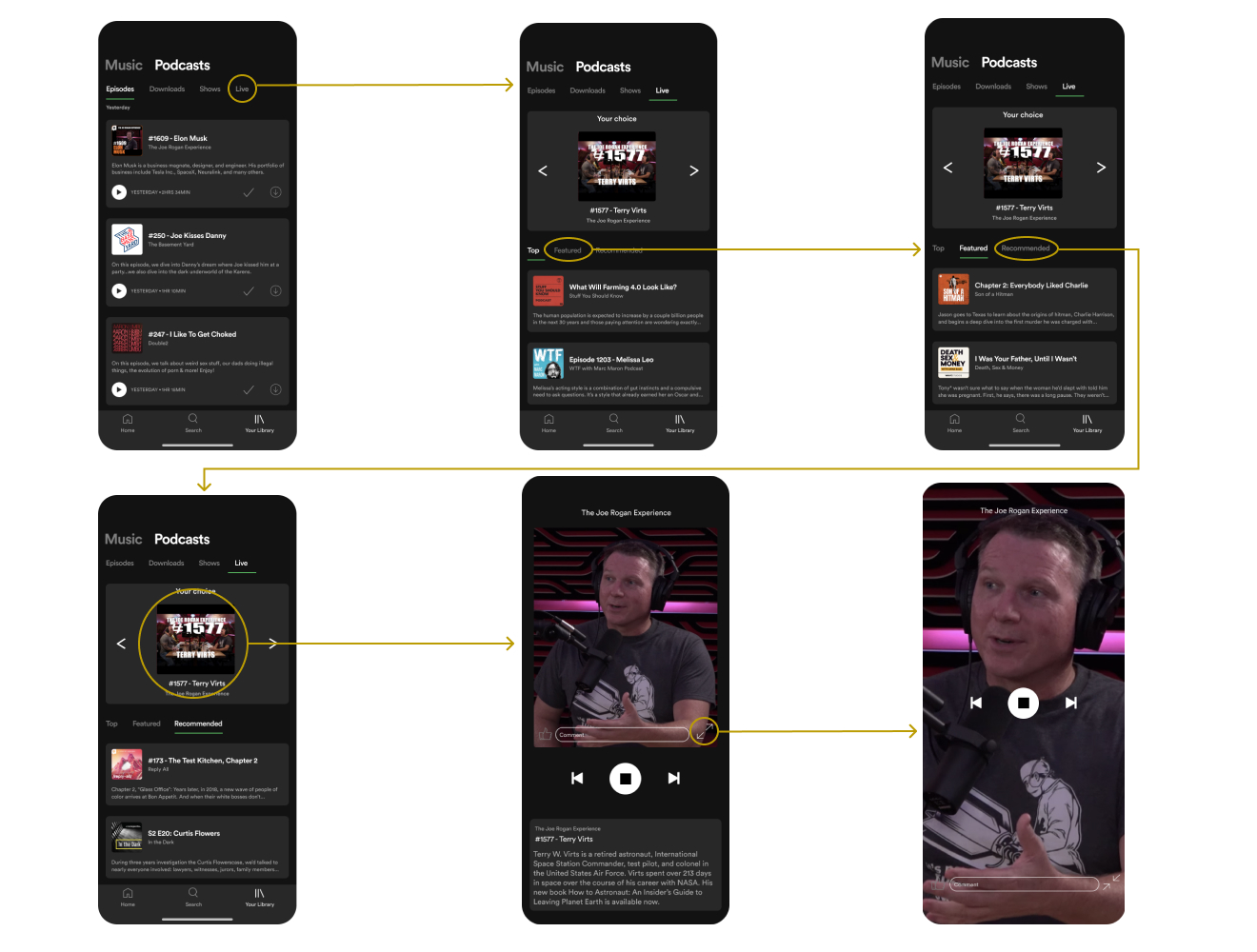
This user flow for the Live segment of Spotify's podcast section shows a breakdown of every step that a user will take to access Live streaming shows.
The design is simple and requires minimal time and effort for a user to watch a live show.

Key Features

Live
Like
Comment

Wireframes and Rapid Ideations

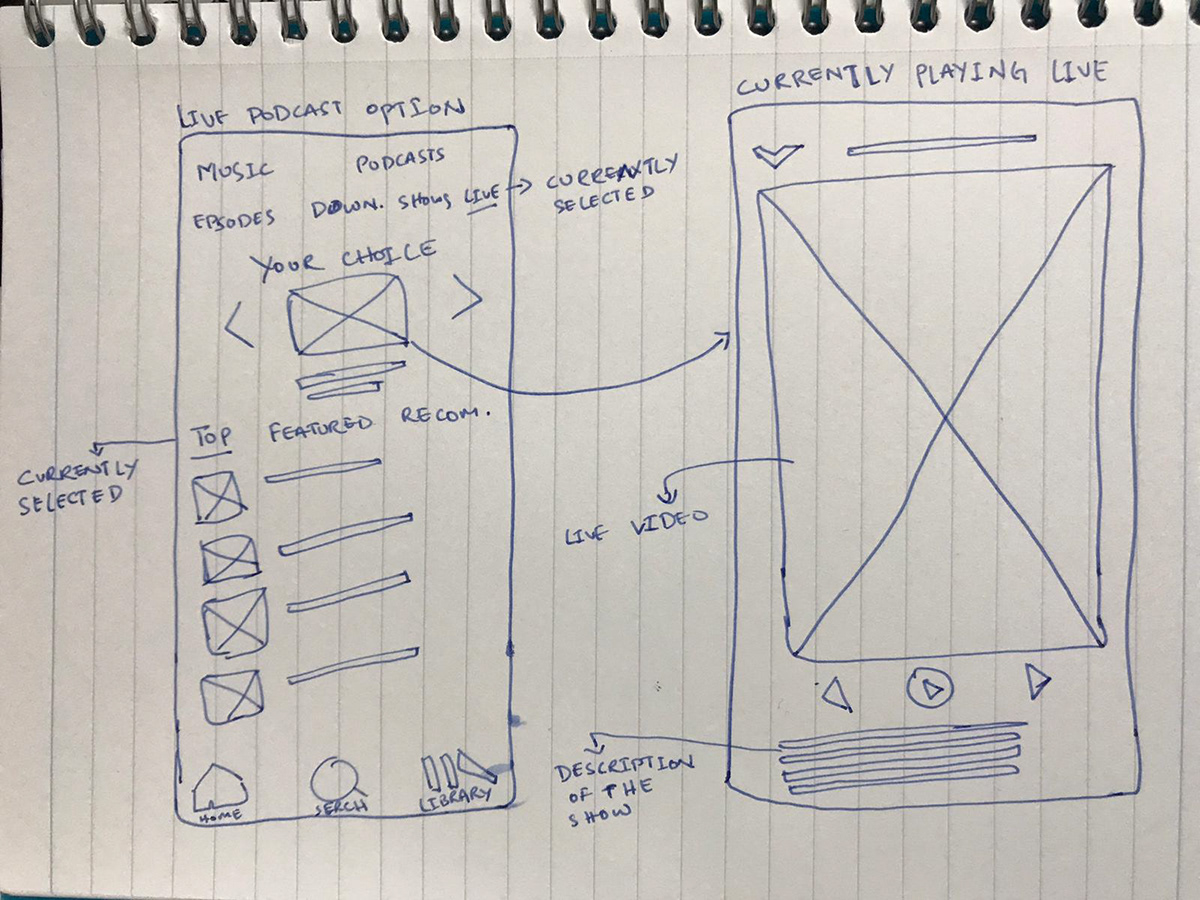
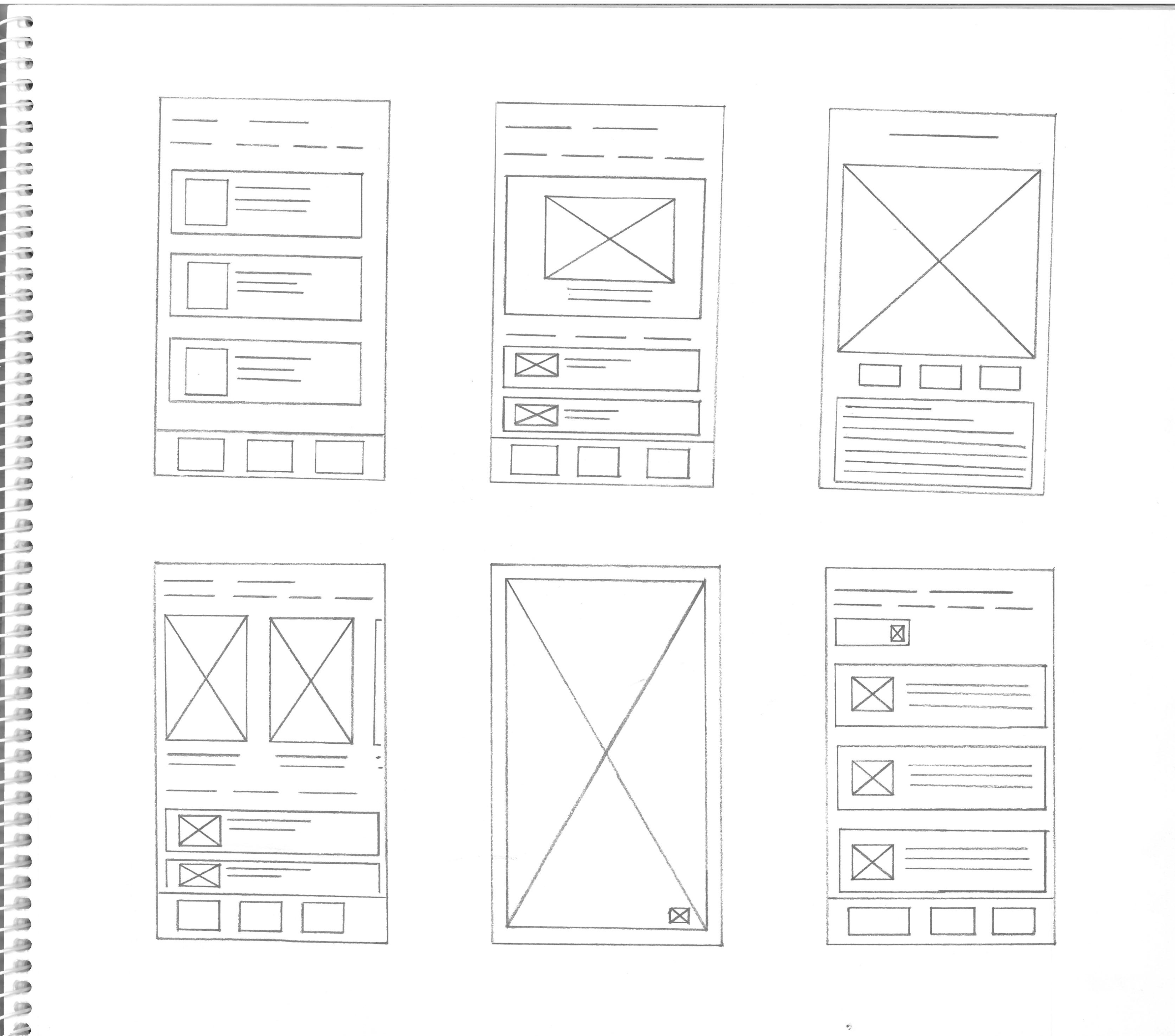
Before the digitalization process of the Live segment, I created low-fidelity wireframes to find insights for a better design, such as details for smoother user interaction and usability.
Low-fidelity wireframing also aided in progressing with a better understanding of high-fidelity wireframing and prototyping.
Click to open pics

Usability Test

Prior to creating the final mockup and prototype, I conducted a quick usability test 4 candidates. The important feedbacks I received are as follows:

Outcome

Creating the high fidelity wireframe had its share of obstacles, from user interaction design to other aesthetics for a better user flow.
High fidelity wire framing provided a better understanding of the overall mood of the application and the experience the user would go through.
Visit prototype

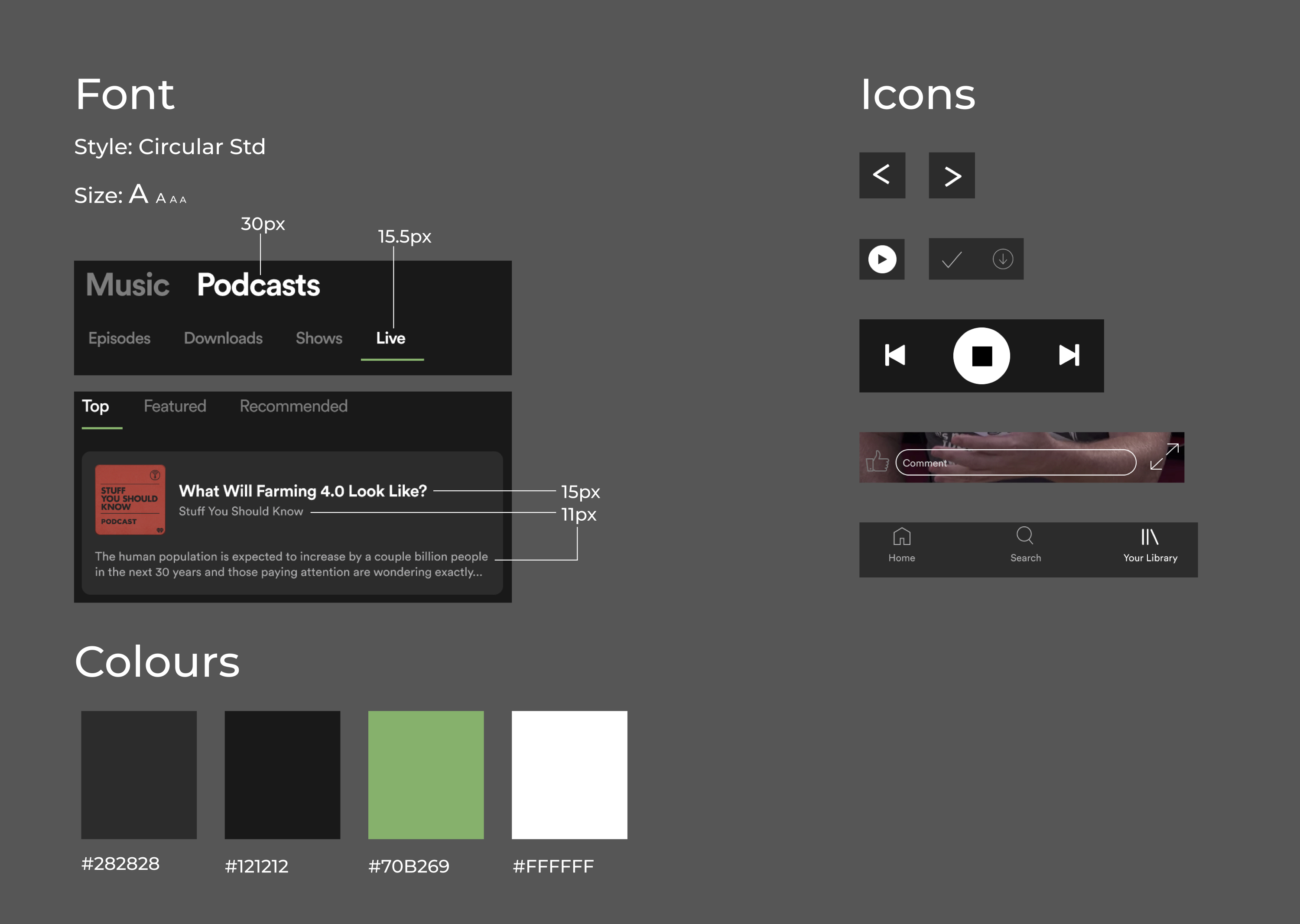
Design System

To provide consistency and easy user flow, I did not transform Spotify's traditional design system. Also, I believe it would be appealing while introducing the new Live segment by not doing so.

Takeaways

The most important aspect that helped this project reach its goal was dedicated research on how best to increase users' interest in podcasts to arouse engagement with the audience and podcasters. Followed by comprehending needs and pain points for creating a flawless design. The biggest challenge was to create a seamless design that would be quick and easy to access.

Key Lessons Learned

Throughout my journey I encountered roadblocks and dilemmas. I've taken away lessons I didn't think I would've learned if you had asked me before we began.

1. Putting Feelings Aside (It's not personal)
The most valuable lesson I learned during this project was the importance of putting personal feelings aside. One of my favourite parts of product design is working towards solutions to solve other people's problems. We must separate ourselves from our designs because at the end of the day, it's not for us. We're working towards a greater goal.

2. Copy is an incredibily powerful Tool
Visual communication and copy go hand-in-hand. Copy speaks and navigates users—without clarity, users will get confused and leave. Some texts might also be reduced if you use the right term as well as frame context specifically/correctly.

3. Time Management: Think Fast, Think Critically
Time restrictions have influence on the extent of decisions and many other aspects of our responsibilities.
I personally believe every decision, from work to everyday life, needs to have intention and direction.
Next
AaronLimbu2021